

Broken, weak or sore back teeth
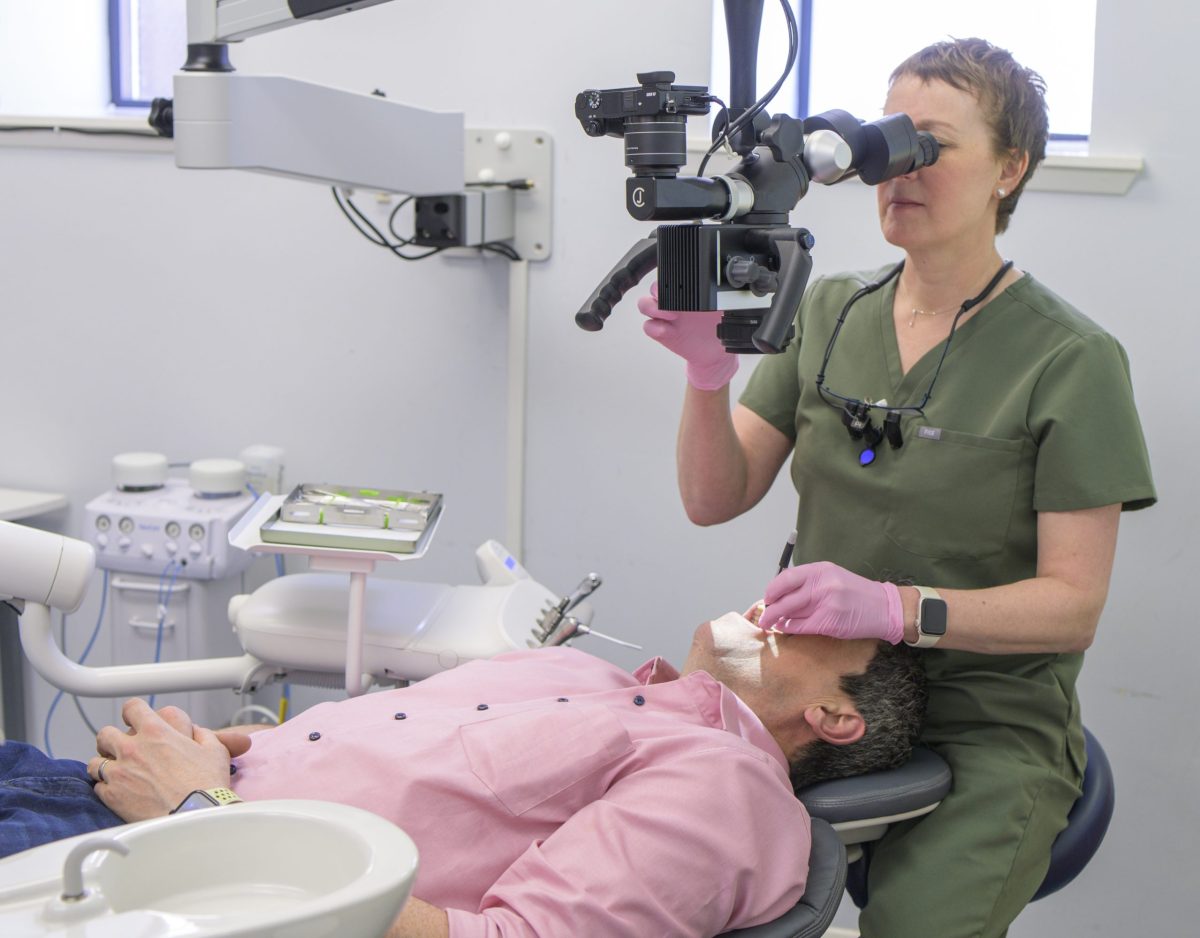
Cracked, broken or sore back teeth
Keeping your own teeth
Back teeth do the heavy chewing, and they’re the first to crack, especially if you have large existing fillings. Many people are told the answer is a crown, or that the tooth can’t be saved.
We take a different approach.
Rather than cutting your tooth down to fit a crown, we only remove the cracks and weak parts, then bond to what’s there and rebuild it, keeping as much of your own tooth as we possibly can. The finished tooth looks, feels and works just like a natural, strong tooth. The results are predictable and built to last for decades.
That’s why, for members, our composite restorations, or ‘white fillings’, and the foundations beneath our onlays come with a 10 year guarantee.
Signs a tooth needs attention
- It’s sore when you bite, or sensitive to hot and cold.
- A piece has broken off, or a filling has fallen out.
- You can see crack lines, or an old filling looks dark or worn at the edges.
- You have large old fillings, especially metal ones, that have been in for many years.
Large fillings often hide cracks underneath. During your check-up we look for the warning signs that a tooth is weakening.
How we save teeth
This approach is called biomimetic dentistry, which simply means copying nature. Your tooth is made of a hard outer layer and a softer, flexible inner layer, and we rebuild it the same way. That means:
- bonding the restoration to the tooth, so it seals out bacteria and supports the tooth from within
- working under rubber dam on every filling and onlay, to keep the tooth clean and dry while we bond
- using magnification, so we can see cracks and decay that are hard to spot by eye.
If you’d like, we’ll email you photos afterwards: your tooth before we started, the damage we found, and the finished result. Most people are surprised by what was hiding there.
A second opinion
If you’ve been told a tooth can’t be saved, or that it needs a crown or an extraction, we’re happy to take a look. You don’t need to be a member of the practice.
Start with a free, no-obligation chat with one of our care coordinators. They’ll listen, talk you through what might be possible and explain the fees. If you’d like to go ahead, we’ll book you in with the right dentist for an assessment.
We’ll always be honest with you. If a tooth genuinely can’t be saved, we’ll talk you through the options for replacing it, including dental implants.
Root canal treatment
Sometimes the nerve inside a tooth is damaged or infected. Root canal treatment can save the tooth rather than removing it. Our specialist endodontist, Will Donovan, sees members and non-members at the practice, and also takes referrals from other dentists. Afterwards, an onlay is often the best way to strengthen a back tooth and protect it from breaking.
Fees
Fees depend on the size of the repair. You’ll always have a written estimate before any treatment starts. See our current fees.
FAQs
We use local anaesthetic, and most people find the treatment very comfortable. Several patients have told us they nearly fell asleep.
A crown means shaping the whole tooth down, which removes a lot of healthy tooth. An onlay covers only the parts that need protecting, so more of your own tooth stays.
With good care and regular check-ups, onlays and overlays typically last 15 to 20 years or more.
Yes. Tell us when you book. We’ll explain everything, go at your pace and stop whenever you need to.
“I also recently had repairs made to a chipped tooth as well as a filling, both by dentist Amber Aplin. It was quite a long procedure but I honestly could have fallen asleep as I felt so relaxed in the chair! And the result is excellent.”